
Sensory Needs

Sensory Needs refer to how children and young people take in, interpret and respond to sensory information, including sights, sounds, touch, movement and internal body signals. Some pupils are more sensitive to sensory input, while others seek additional sensory experiences to help them feel regulated and comfortable. This category is informed by research into sensory processing, neurodiversity and child development, including work relating to autism and ADHD. Sensory experiences within school environments can have a significant impact on wellbeing, attention and participation. When pupils become overwhelmed or under-stimulated, behaviour may communicate discomfort, distress or a need for support. Identifying sensory needs can help adults make adjustments that reduce overwhelm and increase comfort, engagement and inclusion.
What it looks like in the classroom
Every child responds differently, but some common signs include:
-
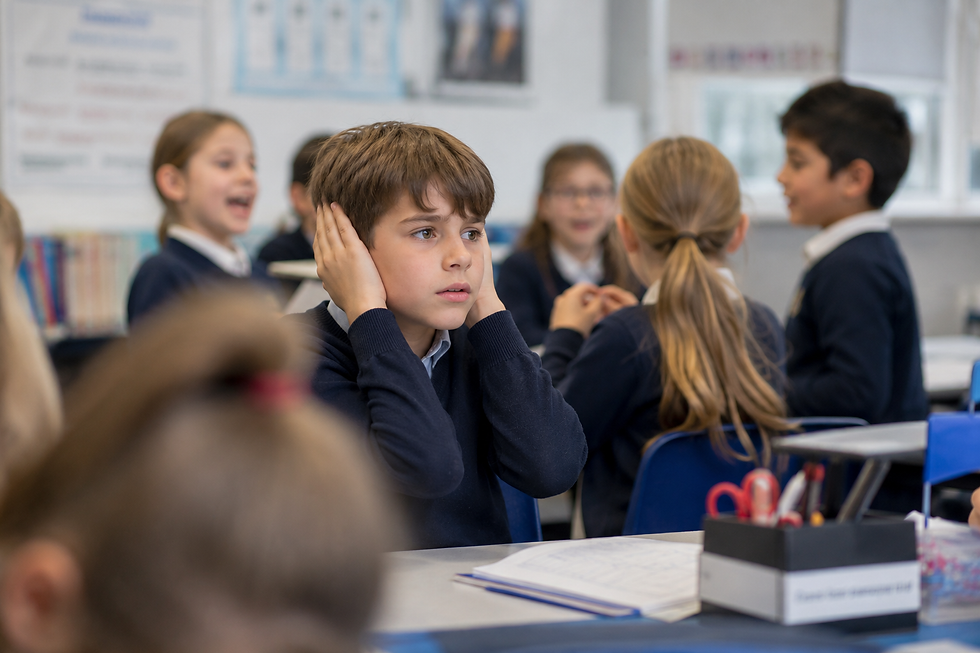
Covering ears, flinching, or distress in loud or unpredictable environments (assemblies, corridors, canteen)
-
Finding busy or crowded spaces “too much” to cope with
-
Becoming overwhelmed by bright lights, smells, touch, or movement
-
Avoiding certain clothes, shoes, labels or uniforms
-
Appearing distracted, “on edge” or unable to settle in sensory‑rich spaces
-
Fidgeting, rocking, chewing, tapping, or constantly moving to regulate
-
Shutting down, freezing or withdrawing when overloaded
-
Becoming suddenly emotional or dysregulated without an obvious trigger
-
Refusing to enter certain spaces or situations (assembly, dining hall, PE changing rooms)
-
Difficulty sitting still for long periods due to physical discomfort or sensory restlessness
-
Irritability or fatigue after sensory‑heavy parts of the day
-
Struggling with personal space and being touched unexpectedly
-
Needing chewing, movement or deep pressure to stay calm and focused
Strategies to Support
Practical, evidence-informed approaches designed to help educators look beneath the surface, scaffolding growth through compassionate, needs-led intervention.
Reducing sensory load in the environment
-
Reduce unnecessary noise where possible; use soft furnishings, carpets, or quiet corners.
-
Offer ear defenders or noise‑reduction headphones for pupils sensitive to sound.
-
Provide advance warning before loud or unpredictable events (e.g., fire drills, assemblies).
-
Use natural or softer lighting where possible; avoid harsh fluorescent lighting.
-
Seat pupils away from strong smells (canteen areas, art materials, cleaning products).
-
Reduce visual clutter; create calm, predictable classroom displays.
Supporting sensory regulation and comfort
-
Allow regular movement breaks (walk, stretch, hydration break, simple movement tasks).
-
Provide fidget tools, wobble cushions or regulation aids discreetly and without drawing attention.
-
Offer chewing options when appropriate (chewelry, gum if permitted, crunchy snacks).
-
Provide deep‑pressure options (weighted lap pads, firm seating, push‑pull activities).
-
Allow uniform adaptations when certain fabrics or labels cause discomfort.
-
Let pupils choose seating (e.g., standing desk, edge of room, near door) to reduce discomfort or proximity stress.
Helping pupils manage sensory overwhelm
-
Create a “sensory exit plan” - a safe, agreed way to leave before overload escalates.
-
Provide low‑sensory spaces for busy times such as break and lunch.
-
Support pupils to return from sensory breaks gradually and calmly.
-
Keep responses calm and neutral during overload; reduce sensory input first, talk second.
-
Recognise that masking sensory discomfort is exhausting and offer recovery time afterwards.
Preparing pupils for predictable sensory demands
-
Use visual timetables or now/next boards to reduce anticipatory sensory anxiety.
-
Structure transitions carefully; sensory overload often increases during change.
-
Provide alternative spaces for assemblies, canteen or PE changing rooms if needed.
-
Pair pupils with peers who respect personal space and boundaries.
-
Use predictable seating plans to reduce uncertainty in busy environments.
Supporting attention, processing and communication in sensory‑rich settings
-
Give clear, simple verbal instructions and avoid long blocks of spoken information.
-
Break down multi‑step instructions to reduce cognitive load.
-
Check understanding privately if the classroom environment is noisy or distracting.
-
Use visual supports (pictures, diagrams, gesture, written instructions) to anchor attention.
Strengthening interoception (noticing bodily signals)
-
Help pupils tune into internal cues (“Does your body need a drink, a rest, or a toilet break?”).
-
Build routine check‑ins for hunger, thirst, toileting and body comfort.
-
Offer short rest breaks after strenuous physical or cognitive tasks.
-
Teach grounding strategies that help reconnect with body signals (breathing, pressure, movement).
-
Support pupils to recognise early signs of sensory or emotional overload before it becomes urgent.
Working with families and professionals
-
Notice patterns in headaches, stomach aches or nausea and explore possible sensory or interoceptive triggers.
-
Liaise with parents to share sensory preferences, sensitivities and routines that help.
-
Collaborate with Occupational Therapists where available for personalised sensory plans.
-
Share effective classroom strategies with families to build consistency across home and school.
Supporting adolescents sensitively
-
Allow older pupils autonomy around sensory tools so they feel socially comfortable using them.
-
Offer discreet options (small fidget items, subtle ear defenders, break passes).
-
Validate sensory differences without infantilising (“Lots of people have sensory strengths and challenges, you’re not the only one”).